
There's a relationship that's shaped how we build amplifiers longer than almost anything else at Linear Tube Audio: the one between our ZOTL circuit and the panel speaker — electrostatic, planar, open-baffle, dipole, whatever form it takes.
It isn't a trend we've jumped on. David Berning's amplifier designs have had a quiet rapport with panel speakers since long before Century existed — his EA-230, built decades ago, was already known for bringing out the best in electrostatics. That thread runs straight through everything we've built since. Customers have paired our amps with Magnepan planars and the legendary Quad ESL-57 and come away startled at how composed and alive those notoriously particular speakers sounded, and LTA owner Mark Schneider has been running his own amps with Maggies and Quads since the company's very first days.
The affinity runs across the whole line, not just our biggest amplifiers. Our Z10e headphone amp was developed with electrostatic headphones in mind, and it's earned a spot as a reference piece in Herb Reichert's system at Stereophile. Steve Guttenberg — The Audiophiliac — gave our Z40+ Integrated his highest marks paired with the dipole Pure Audio Project Duet 15. And it's the amp behind our collaborative Artist Program with Audeze, who regularly reach for the Z10e to demo their own planar and electrostatic headphones.
At the very top of the hobby, the same idea holds. David Berning's collaboration with Hi-Fi One produced the four-chassis Reference SET ($230,000) — and in Robert Harley of The Absolute Sound's own reference system, its favorite partner is a full-range panel speaker, the AlsyVox Caravaggio XX ribbon loudspeaker. It's the same amplifier philosophy at every scale we work at: a wide-bandwidth, transformerless design that gets out of a great panel's way instead of fighting it.
Why panels, specifically
A dipole planar, an open-baffle design, an electrostatic — they all ask something different of an amplifier than a conventional box speaker does. There's no cabinet coloring the sound, no enclosure resonance to damp. What's left, when it's done right, is a kind of disappearing act: the panel stops sounding like a speaker, the amp stops sounding like an amp, and what's left is just the recording. That's the thing we keep chasing, room after room, show after show.
On the road this year
This spring and summer, we took that conversation to three shows, with three different partners, three different flavors of panel speaker.
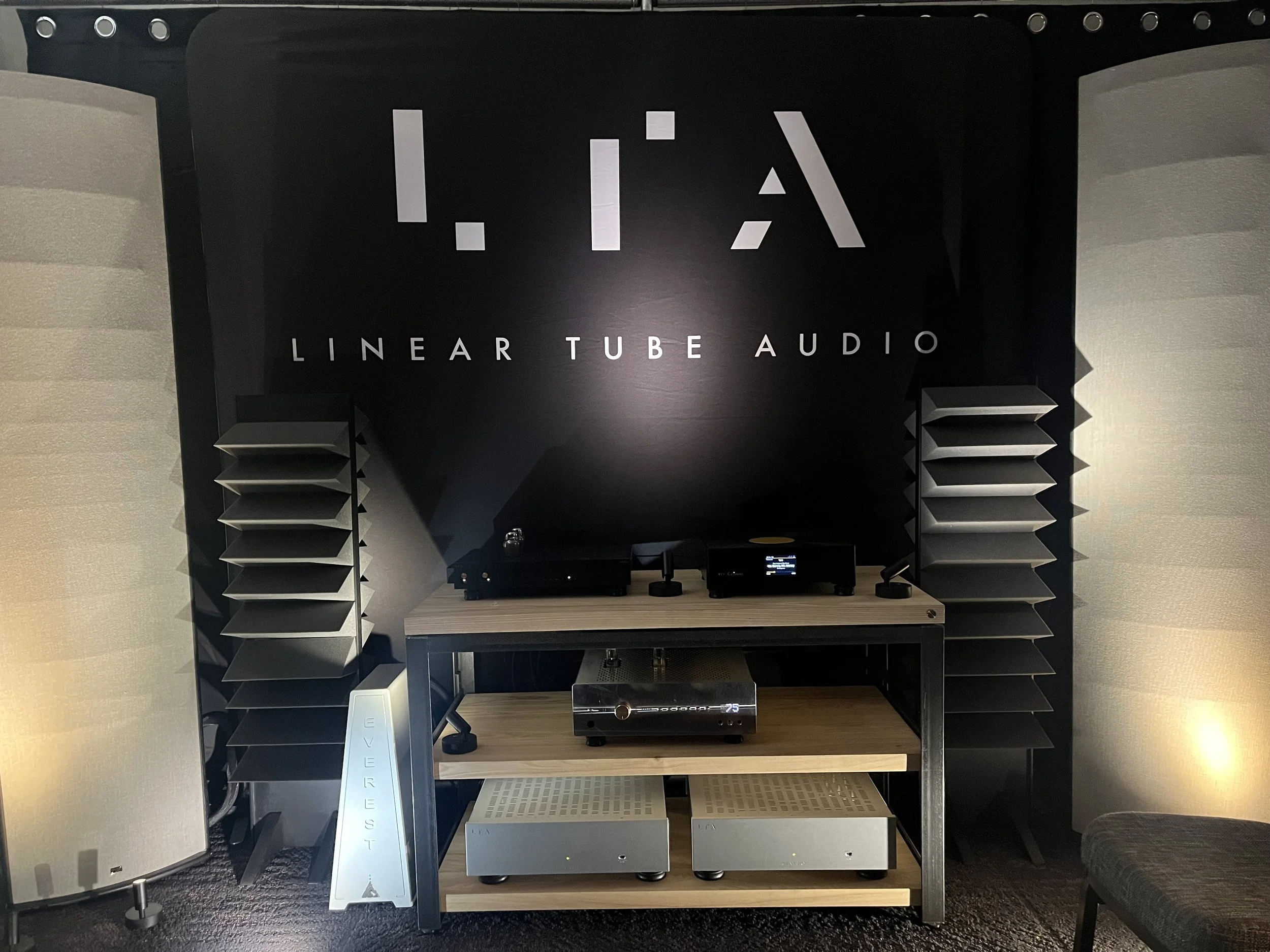
At AXPONA, we shared a room with Sound Lab, whose electrostatic panels remain one of our favorite ongoing partnerships — a relationship we've kept returning to, show after show, because the combination consistently produces some of the most convincing sound in the building.
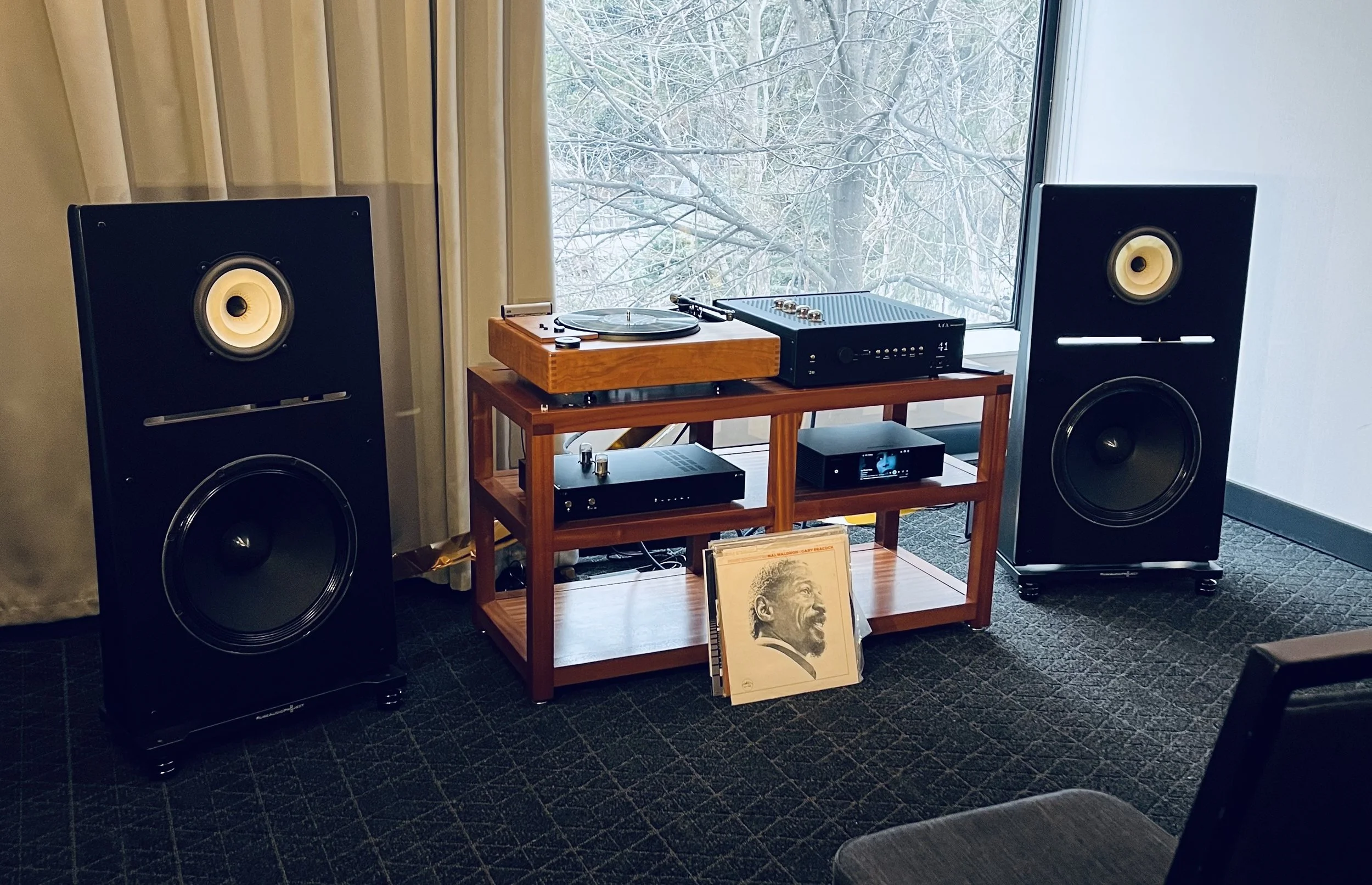
At Montreal Audiofest, we paired with Pure Audio Project, whose open-baffle designs bring a different kind of dipole character into the room — less enclosed, more immediate, a different expression of the same underlying idea.
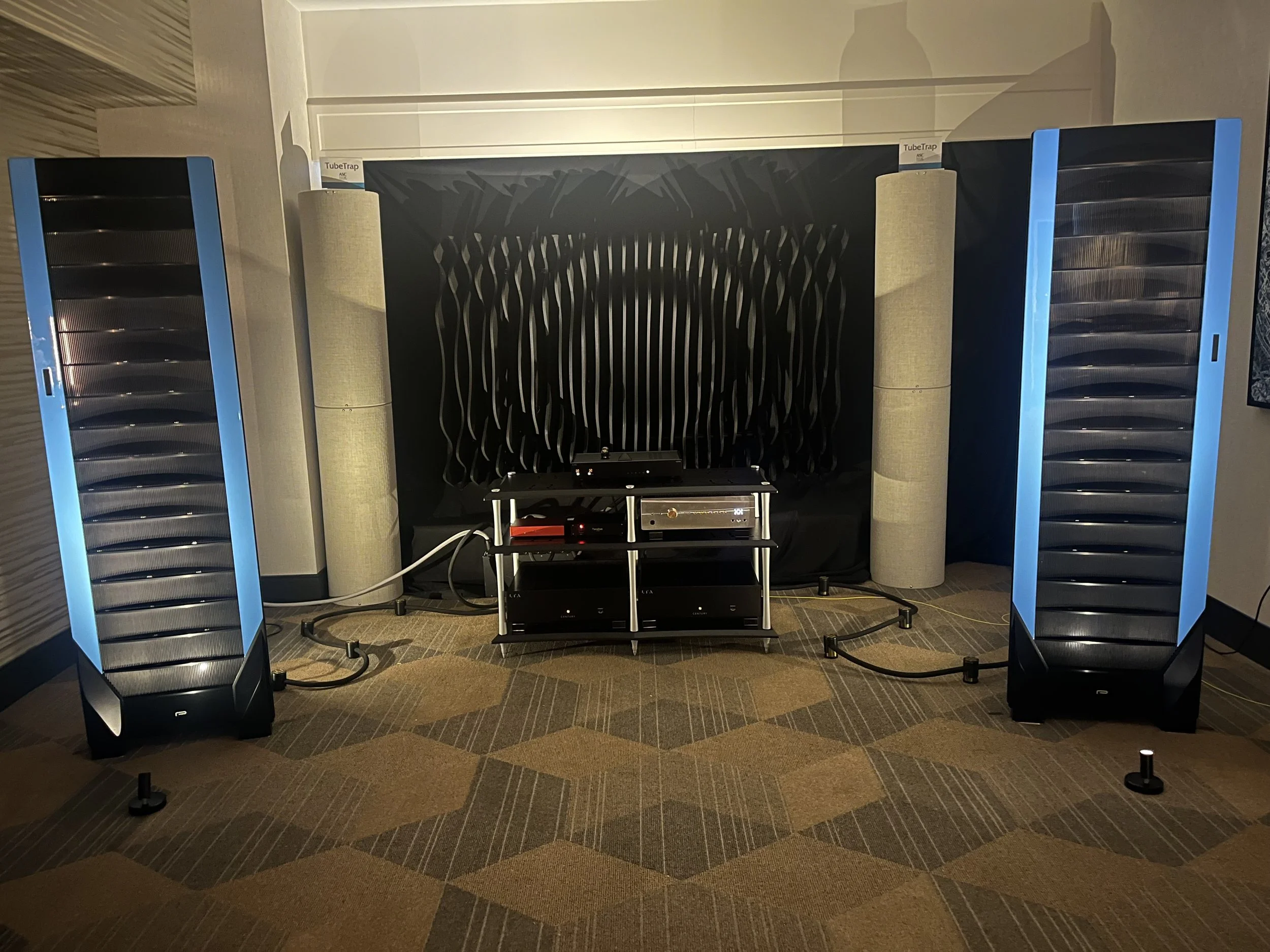
And at Southwest Audio Fest in Dallas, we built out an upscale suite with Spiritual Sound and Unique Home Audio, showing the pre-production Century Preamplifier alongside our Century Monoblocks, driving the Prodigio Audio WR1 Sicambria — a full-range electrostatic — over Spiritual Sound's silver cabling.
Three shows, three panels, one philosophy: the ZOTL meeting a great panel wherever we find one.
Now in our listening room
If you weren't able to catch us on the road, you don't have to wait for the next show. We now have a pair of Sound Lab G7-5C electrostatic loudspeakers available in our Takoma Park listening room, ready to audition with Century and the rest of the LTA line. Come hear what a decade of this conversation sounds like, up close.